Esophageal Manometry Test for Swallowing Problems & GERD | Expert Insight by Dr. Kushan Sengupta
Struggling with heartburn, belching, or food getting stuck in your throat? Learn how modern esophageal manometry helps diagnose motility disorders and GERD accurately.
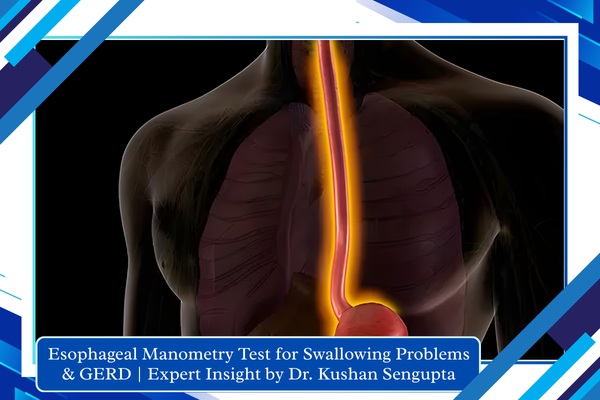
Modern Esophageal Manometry: Finding the Root Cause of Swallowing & Acid Reflux Problems
Gas, repeated belching, heartburn, or the uncomfortable feeling of food getting stuck in the throat—these symptoms are often ignored or treated with temporary medications. However, in many cases, the real issue may lie deeper within the esophagus.
According to Dr. Kushan Sengupta, an experienced gastroenterologist, Esophageal Manometry is one of the most advanced and reliable diagnostic tools available today to detect functional disorders of the esophagus accurately.
🧪 What Is Esophageal Manometry?
Esophageal Manometry is a modern diagnostic test that measures:
The movement (motility) of the esophagus
The strength and coordination of esophageal muscle contractions
The pressure at the junction between the esophagus and stomach (Lower Esophageal Sphincter – LES)
This test is especially helpful in identifying functional disorders such as:
Achalasia
Esophageal Spasm
Severe Gastroesophageal Reflux Disease (GERD)
While endoscopy and ultrasound evaluate structural abnormalities, manometry focuses on muscle function—making it crucial when routine tests appear normal.
Who Should Consider This Test?
Esophageal Manometry is recommended for patients who experience:
Food getting stuck in the throat or chest
Persistent heartburn or long-term acidity
Unexplained chest discomfort
Frequent belching or throat dryness
Evaluation before GERD surgery
If symptoms continue despite medication, manometry can help uncover the underlying functional issue.
How Is the Test Performed?
Dr. Sengupta explains that the procedure is:
Safe and minimally uncomfortable
Completed within 20–30 minutes
Performed by passing a thin, soft tube through the nose into the esophagus
Equipped with special sensors to measure muscle pressure and movement
Patients typically tolerate the procedure well, and no hospital admission is required.
Why Is Manometry So Important?
Sometimes, standard diagnostic tests such as endoscopy fail to detect abnormalities. In such cases, manometry becomes essential.
“Accurate diagnosis is the foundation of proper treatment,” says Dr. Sengupta. Without identifying whether the issue is muscular or functional, treatment may remain incomplete or ineffective.
Manometry ensures:
Precise diagnosis
Targeted treatment planning
Better long-term symptom control
Avoidance of unnecessary medications
Patient Experience: A New Beginning
A 62-year-old patient shared his journey:
“For one and a half years, whenever I tried to eat, I felt pressure in my chest and dryness in my throat. I consulted multiple doctors but did not find relief. After undergoing manometry under Dr. Kushan Sengupta, I learned that my esophagus was not contracting properly. With the right treatment, I am now much better.”
This case highlights how advanced diagnostics can transform a patient’s quality of life.
Conclusion
Persistent gas, belching, heartburn, or difficulty swallowing should never be ignored. Modern Esophageal Manometry offers a precise way to diagnose functional esophageal disorders that might otherwise remain hidden.
With expert evaluation and the right technology, patients can finally address the root cause—not just the symptoms—and return to a comfortable, healthy life.
Quick Links
Contact Us
About
Dr. Kushan Kaushik Sengupta is a skilled Consultant in Gastroenterology and Hepatology at Manipal Hospitals, Kolkata. With an MBBS from Madras Medical College and advanced specialization through MD, DrNB, and Fellowship in Transplant Hepatology.